The Wall Street Journal Jolt: SaaS Faces AI Pressure


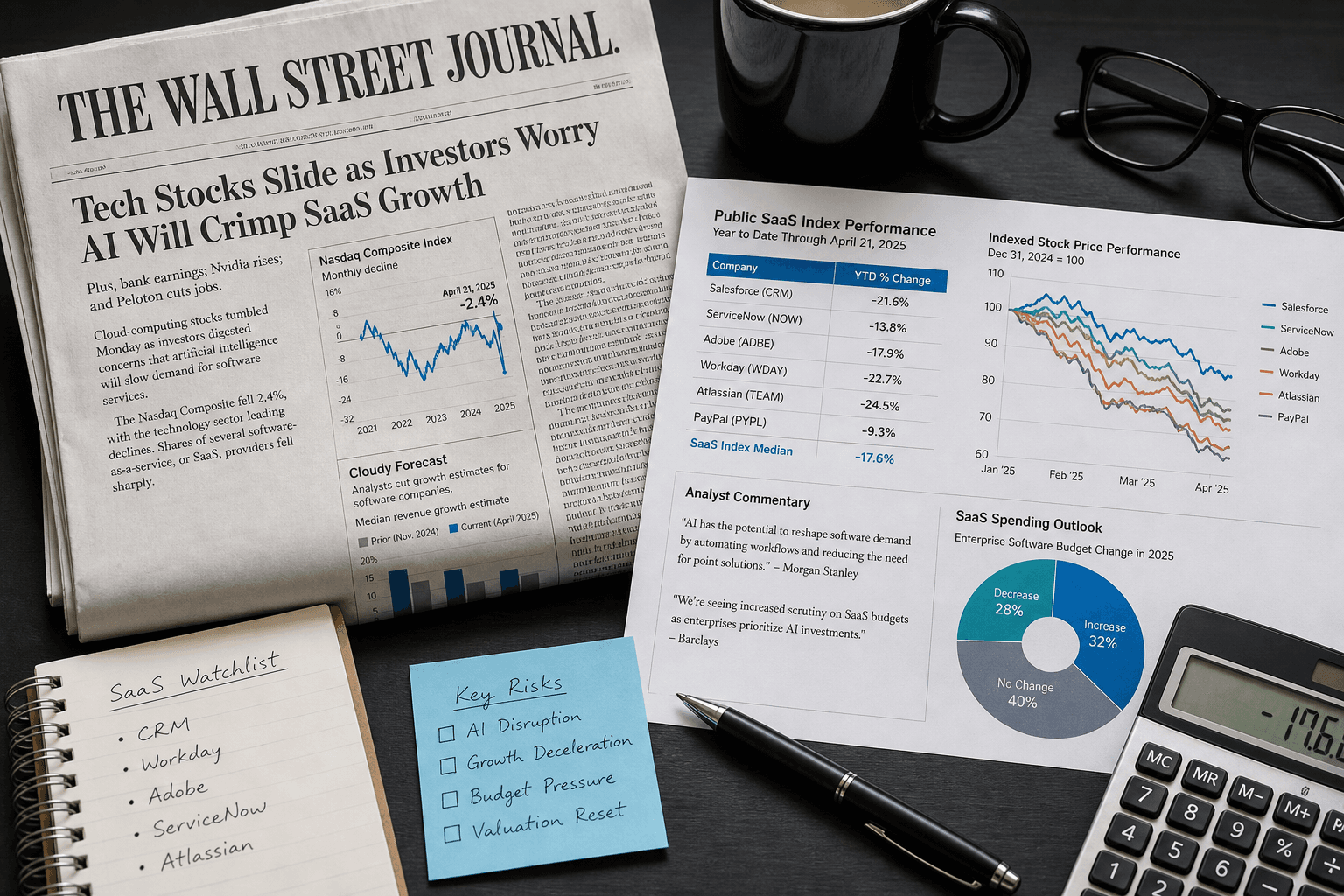
The Wall Street Journal is spotlighting a sharp AI reset in software: once-hot SaaS companies are racing to rethink products as generative AI threatens old workflows, pricing, and customer lock-in. The piece matters because it frames AI not as an add-on, but as a structural challenge to software-as-a-service itself.
Why is SaaS under AI pressure?
The core tension is simple. Traditional SaaS sold specialized apps for specific business tasks. AI assistants and agents now promise to complete more of those tasks directly, sometimes across multiple tools.
That doesn’t mean SaaS disappears tomorrow. It does mean the value shifts. Features that looked defensible can become prompts, automations, or background agent work. The community reads this as a fight over who owns the workflow: the app, the AI layer, or the data system underneath it.
What does this mean for software buyers?
For buyers, the near-term question is whether AI features are real productivity gains or just higher-priced packaging. Expect more vendors to pitch AI-native workflows, agent dashboards, and usage-based pricing instead of seat-based plans.
That could help teams cut tool sprawl. It could also make budgets messier if AI usage becomes harder to predict than a monthly license.
The bigger signal
This isn’t a model launch. It’s a market signal. The phrase “AI apocalypse” is dramatic, but the underlying issue is concrete: software companies built around narrow workflows now have to prove why customers need the full app when AI can sit across many apps.
The winners likely won’t be the loudest AI rebrands. They’ll be the companies that turn AI into measurable work done, with clear pricing and trust around business data.