The Great Watermark Flip and the Memory Riddle: Two Battles for AI's Soul


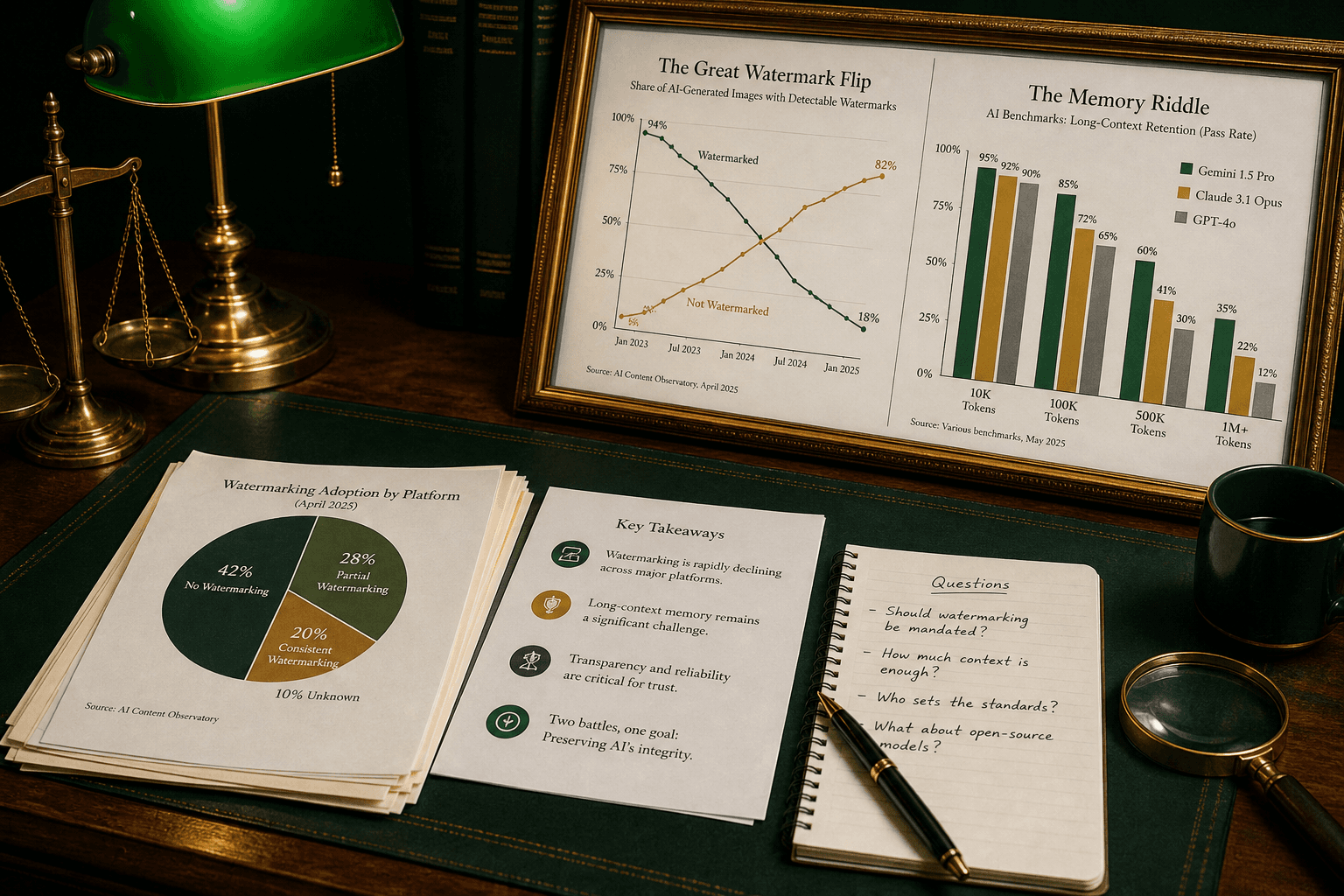
The AI news cycle is a greased pig, and today it's squealing in two directions at once. First, Google just handed users a loaded gun and said, 'You can turn off Gemini's visible watermarks.' Oh, really? The same company that lectured us about transparency and 'responsible AI' is now letting you strip the 'AI-made' label off images. The camps are screaming: one side says it's a victory for user control—no more ugly watermarks spoiling your creative output. The other side calls it a trust-bomb: if you can hide the watermark, how do you stop a flood of undetectable deepfakes? Google's own research says watermarks are fragile, but this feels like a surrender to the 'I don't want to look like I used AI' crowd. Either way, the debate about whether we need visible markers just got a whole lot hotter.
When Facts Change, Should AI Memory Change?
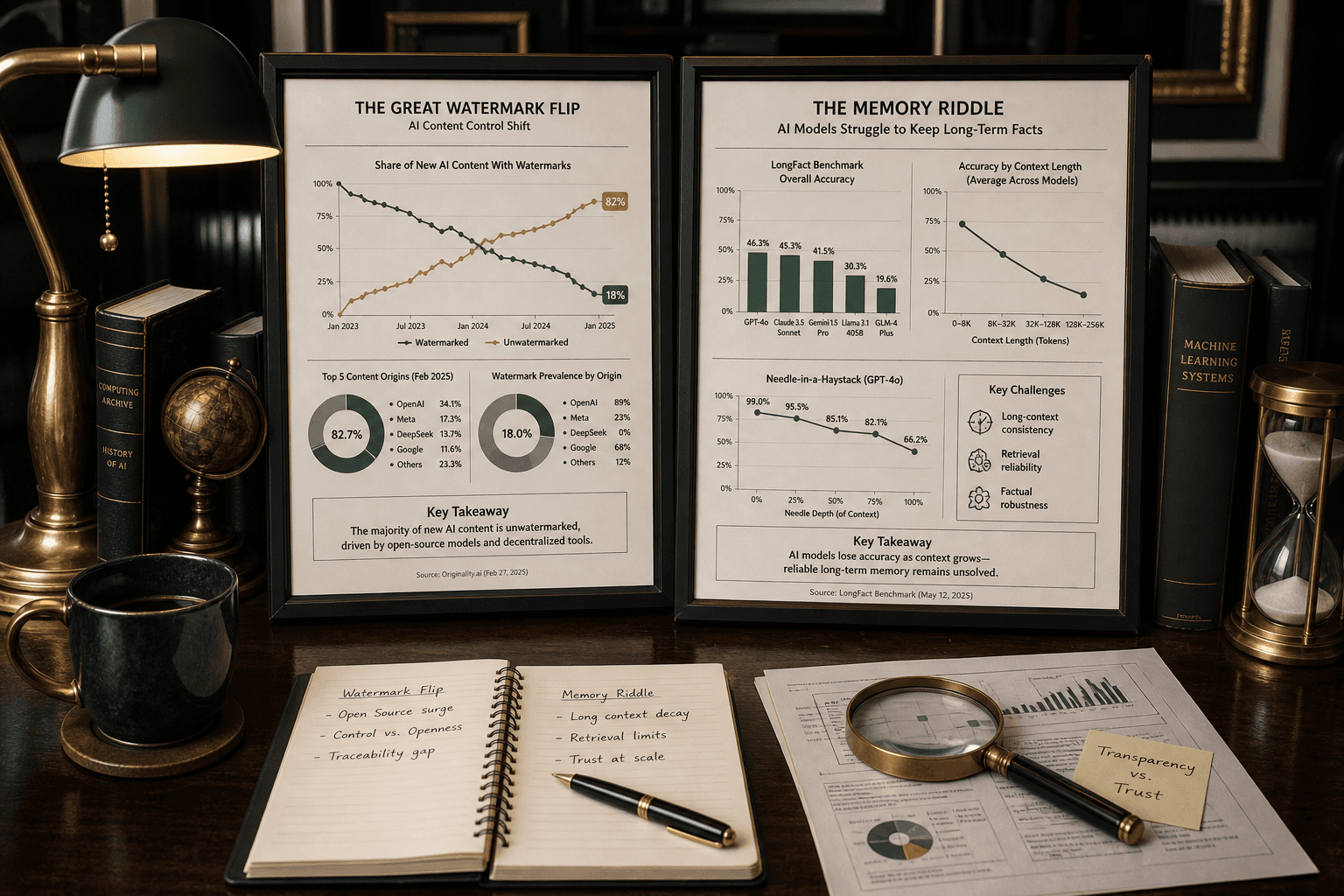
Meanwhile, a quiet little GitHub repo is stirring up a philosophical fistfight. The repo, 'When facts change, should AI memory change?' asks the question that keeps AI engineers up at night. Right now, most models are frozen in time after training—they'll confidently tell you the 2020 election results are still upcoming. The radical idea: let AI update its own memory, like a living Wikipedia. Proponents argue it's the only way to stop hallucinations and keep agents useful in a world where the pandemic ends, governments fall, and prices change. Critics smell disaster: 'Dynamic memory' is a backdoor for manipulation. Who decides what's a 'fact change'? One bad edit and your AI is gaslighting everyone. The argument is raw, and it's exactly the kind of exposed nerve that the jailbreak crowd loves to poke. Two stories, one theme: we're fighting over how much control to give users—and how much to trust the machines we've built.