OpenAI GPT-5.6 Terra vs Anthropic Claude Sonnet 5: SaaS Agents

My call: Anthropic Claude Sonnet 5 takes this SaaS-agent bout on cost discipline, while OpenAI GPT-5.6 Terra stays dangerous for teams already tuned around OpenAI-style workflows. The deciding punch is simple: both list $2.00/1M input tokens, but Sonnet 5’s output is cheaper at $10.00/1M versus Terra’s $12.00/1M.
Price: same entry fee, different finishing cost
Here’s the cleanest round on the card. OpenAI GPT-5.6 Terra costs $2.00/1M in and $12.00/1M out. Anthropic Claude Sonnet 5 costs $2.00/1M in and $10.00/1M out.
That means prompt-heavy workloads start even. But SaaS agents don’t just read; they draft tickets, write summaries, generate code patches, explain incidents, and talk to users. Once output volume climbs, Sonnet 5 lands the body shot: $2.00 less per 1M output tokens.
SaaS-agent fit: service work rewards restraint
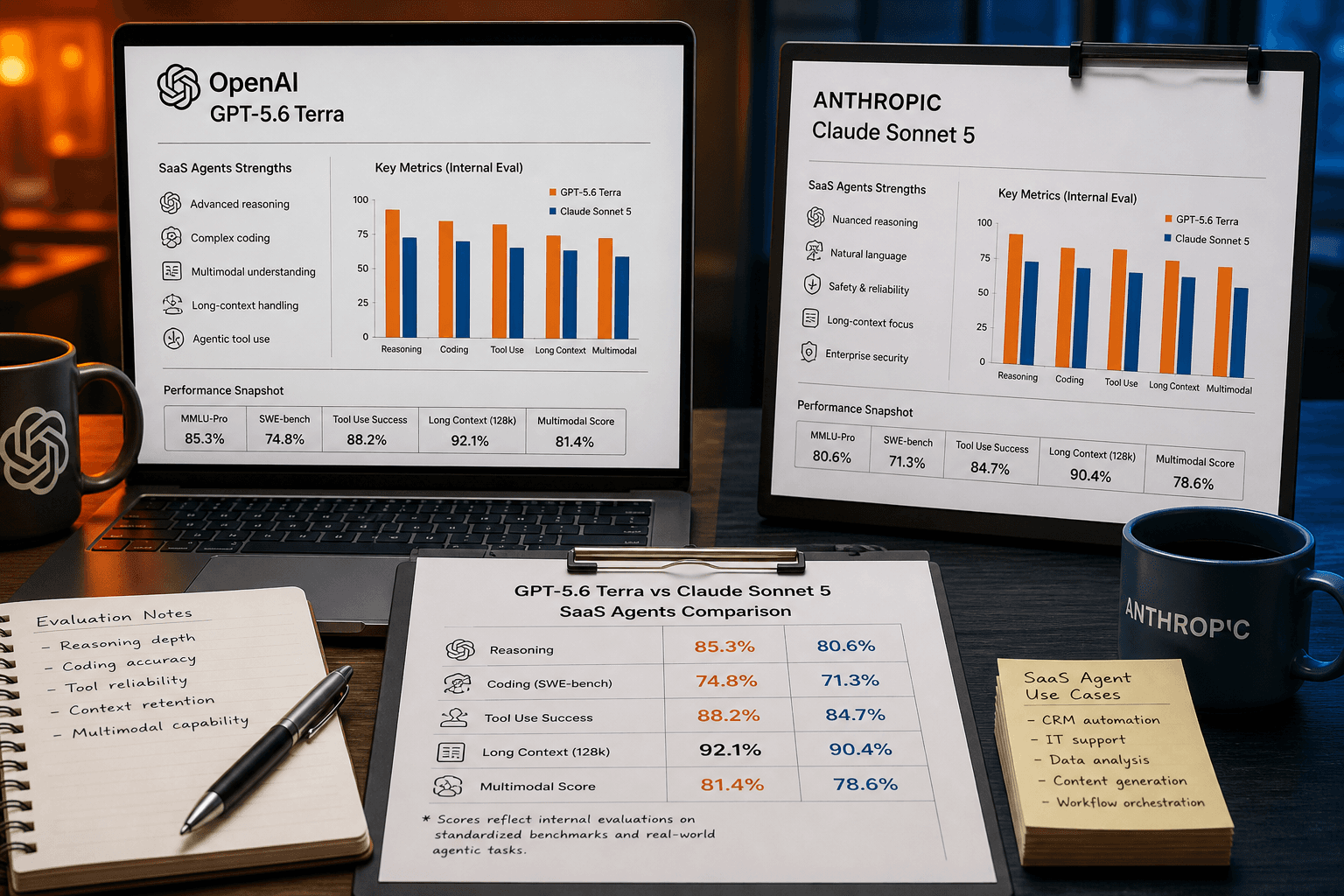
The WSJ-linked SaaS “AI apocalypse” headline points at the real battlefield: software tools turning into agentic workflows. In that setting, the model that can run many small, repeated tasks without spiking output cost has the edge.
Sonnet 5 is the safer default for support copilots, admin automation, CRM notes, internal knowledge assistants, and product analytics explanations. Terra still makes sense if your stack, evaluations, or prompting style are already built around GPT-5.6 behavior. Switching models has a cost, even when the token sheet looks clean.
Incident response and metadata: don’t ignore operations
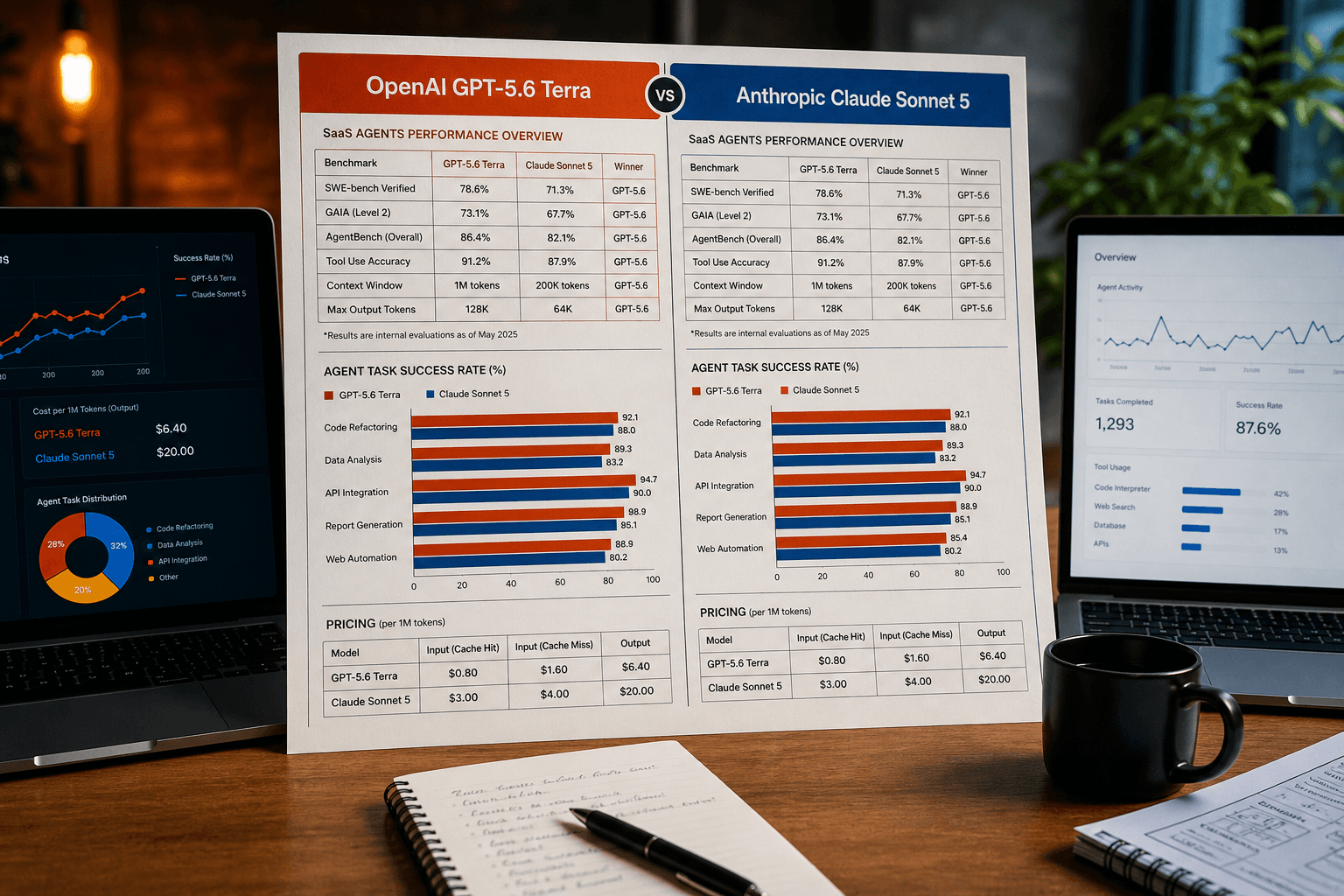
Incident-response agents and AI-output metadata both punish sloppy verbosity. You need clear summaries, tagged decisions, and repeatable handoffs. With the prices given, Sonnet 5 lets teams generate those artifacts at $10.00/1M output tokens, while Terra charges $12.00/1M.
That’s not a knockout by itself, but over incident timelines, postmortems, customer updates, and compliance notes, it adds up fast.