Llama 4 vs Claude Opus 5: Open-Source Closes the Gap


Meta's Llama 4 finally makes the open-source vs. closed frontier a real fight. Claude Opus 5 still takes the win on raw creative polish and lock-in-free reliability, but Llama 4 is the better pick if you want self-hosted control at near-frontier quality. It's closer than I expected — and the price difference changes the math.
Creative Output
Claude Opus 5 has a clear edge in producing polished, human-quality writing and nuanced creative tasks. It's the model you trust for final drafts. Llama 4, while capable, shows more variability — it can hit impressive heights but occasionally drifts into generic phrasing. The Unite.AI report notes AI creative output is converging across providers, so the gap is narrowing, but Opus 5 still leads.
Who Owns Your Workflow
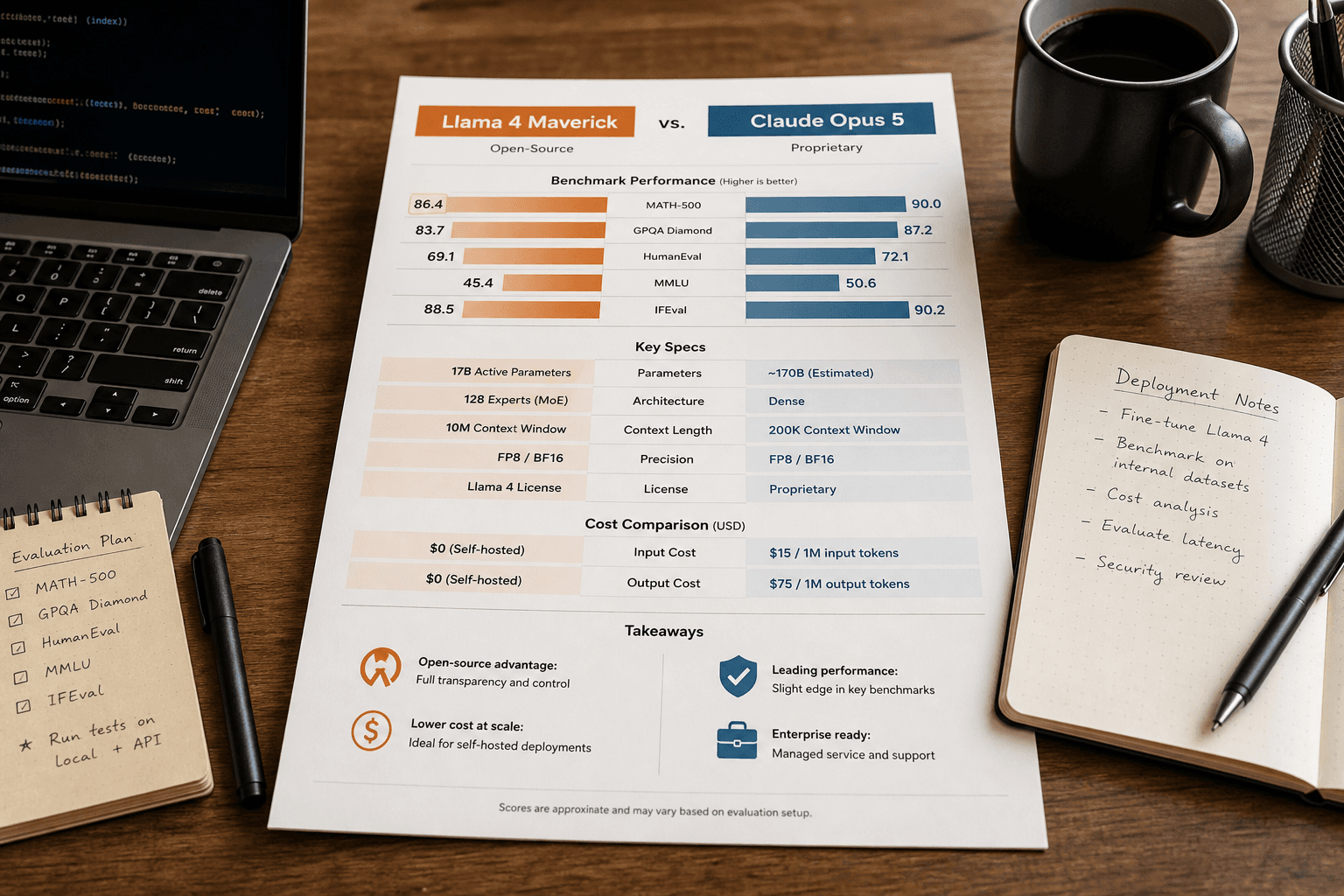
This is where Llama 4 wins big. You can self-host, fine-tune, and fully own the pipeline — no API keys, no data retention policies from a third party. Claude Opus 5 costs $5.00/1M in and $25.00/1M out, which is expensive for high-volume production. Llama 4's open weights mean you're paying for hardware, not per-token fees. For a dev team with infrastructure, that's a massive long-term savings.
Verdict: which one should you pick?
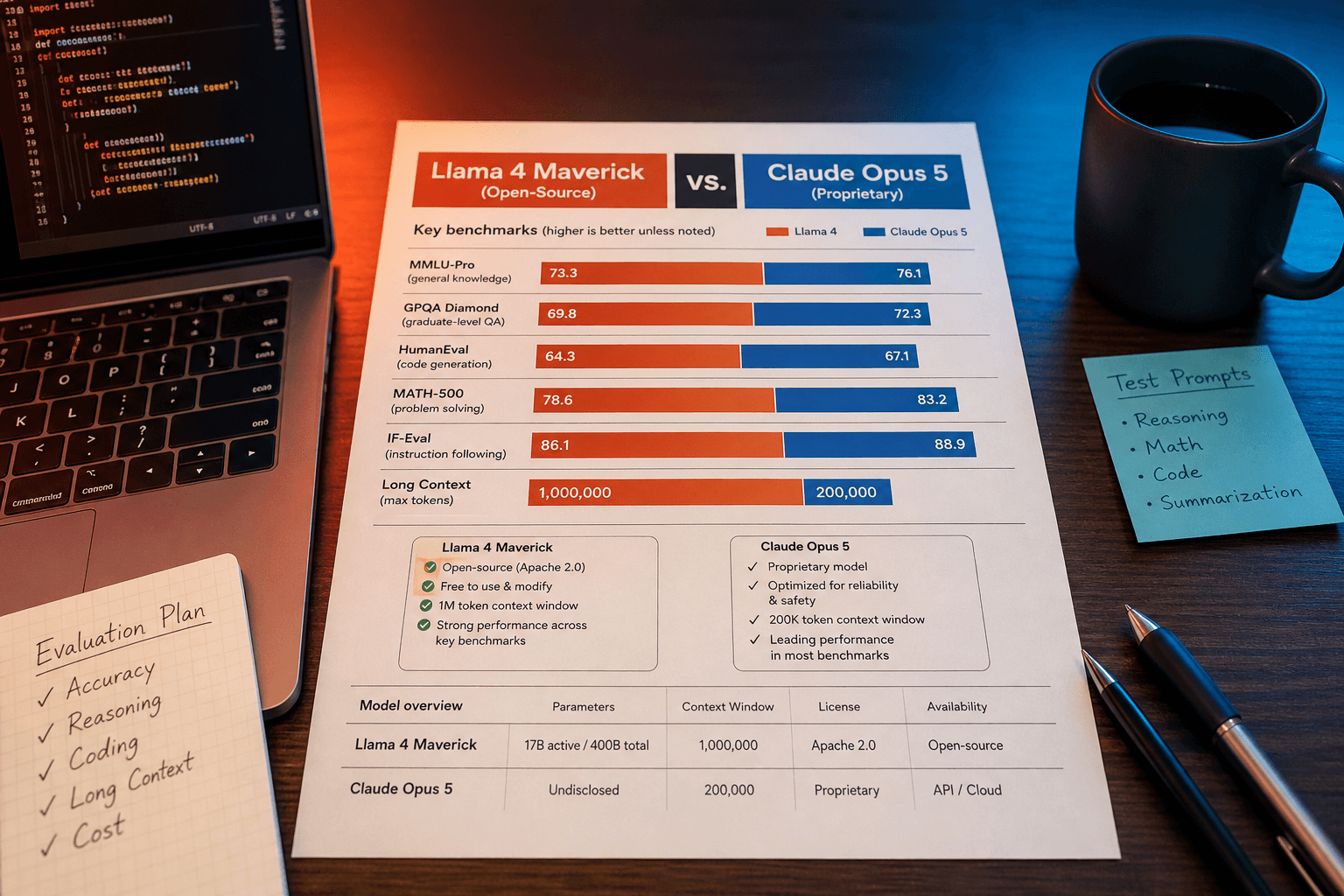
Pick Claude Opus 5 if you need the most reliable, polished creative output and don't mind paying premium rates (just $5 in / $25 out per million tokens). Pick Llama 4 if you want frontier-adjacent performance, full control, and long-term cost savings — but you'll need the hardware and team to operate it. There's no wrong answer, just a different trade.