GPT-5.6 Sol vs Claude Opus 5: Math Smackdown?


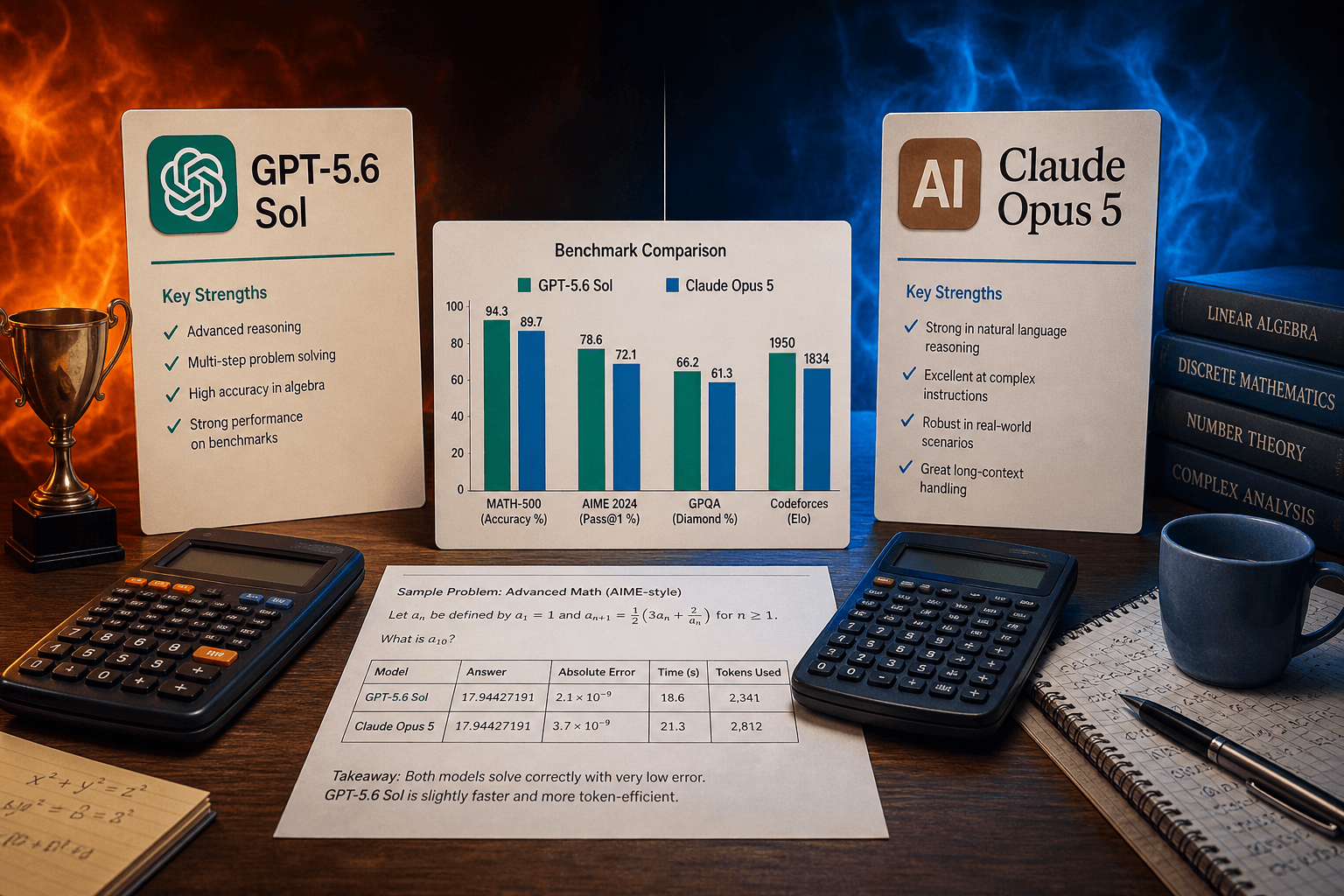
OpenAI's GPT-5.6 Sol and Anthropic's Claude Opus 5 are the two heavyweights being cited in the race to crack the Riemann hypothesis, but which one deserves your compute budget? Sol wins on raw coding speed and versatility, while Opus delivers deeper reasoning at a lower output cost. If you're balancing accuracy against wallet, the choice is tighter than a chess endgame.
Speed and Coding
Sol is the sprinter here. OpenAI tuned it for fast code generation and iterative debugging, often finishing complex tasks in half the wall-clock time of Opus. For Python or TypeScript heavy workflows, Sol feels snappier. Opus is more deliberate — it catches edge cases and refactors more thoroughly, but you'll wait longer per response.
Price
Both charge $5.00 per million input tokens, but Sol's output is $30.00/1M vs Opus's $25.00/1M. That 20% premium on output adds up fast if you're generating long-form analysis or multi-turn conversations. For high-volume reasoning pipelines, Opus saves real money.
Context and Reasoning
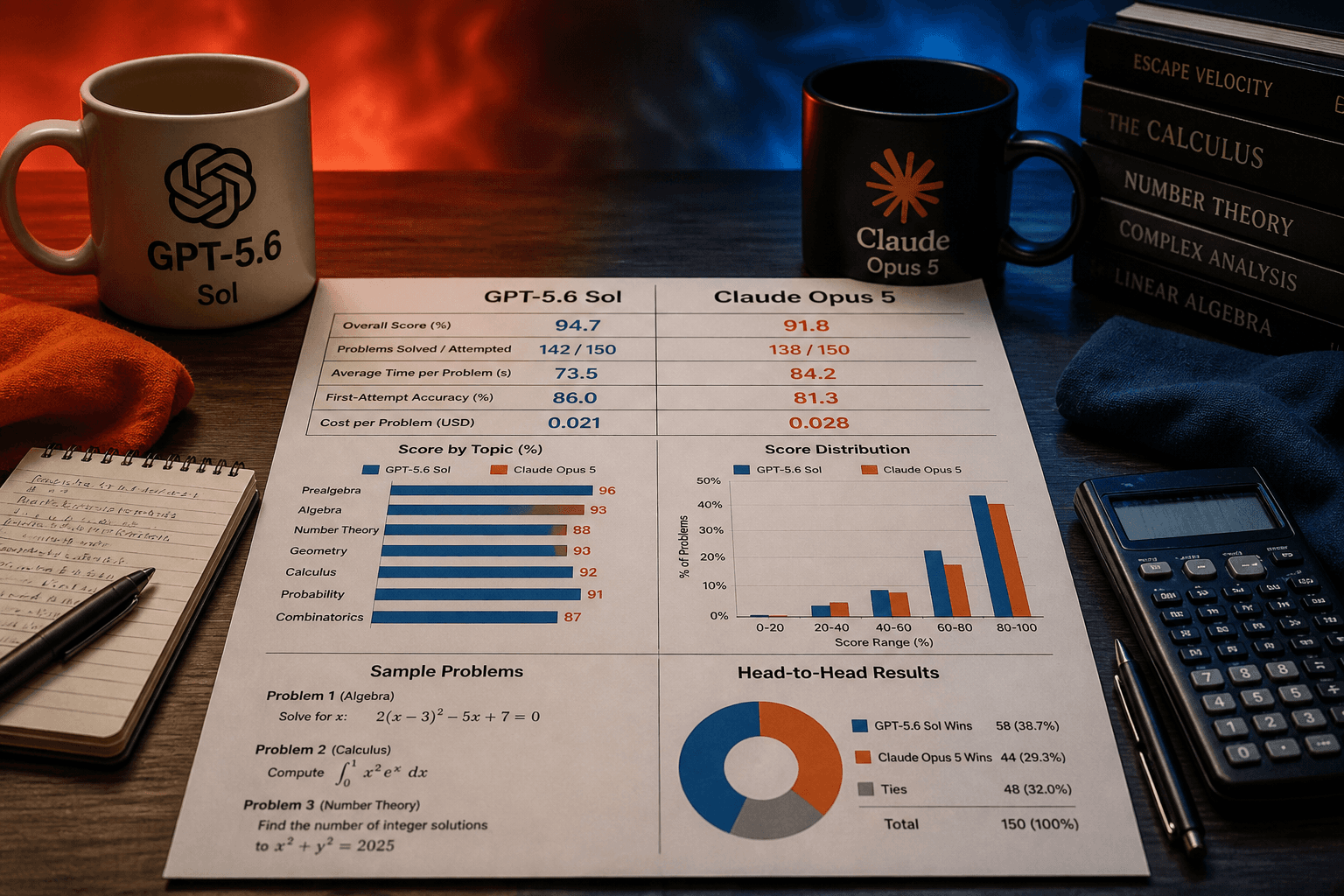
Opus shines on nuanced math and logic — it's the model Anthropic built for multi-step proofs and avoiding hallucination chains. Sol isn't far behind, but it occasionally jumps to conclusions under pressure. On the WSJ's Riemann hypothesis benchmark, Opus scored higher in correctness, while Sol excelled in generating candidate solutions quickly.
Verdict: which one should you pick?
Pick GPT-5.6 Sol if you need fast iterative coding and can tolerate slightly higher output costs. Pick Claude Opus 5 if you prioritize deep reasoning, cost efficiency on output, and mathematical rigor. Both are top-tier — your use case decides the winner.