Amazon Gilroy Jolt: AI Data Center Vote Sidestepped


Amazon is facing fresh scrutiny in Gilroy, California, after Tom’s Hardware reported that a planned AI data center moved forward under procedures that kept residents out of a public comment window. The fight matters because AI infrastructure is now colliding with local control, power demand, and community trust.
What happened in Gilroy?
Tom’s Hardware says the project advanced through a route tied to 45-year-old rules, avoiding a community vote that residents expected would shape the outcome.
That doesn’t mean the project is illegal. The key point is narrower: the reported process limited public participation at a moment when AI data centers are drawing sharper questions about land use, electricity, water, and noise.
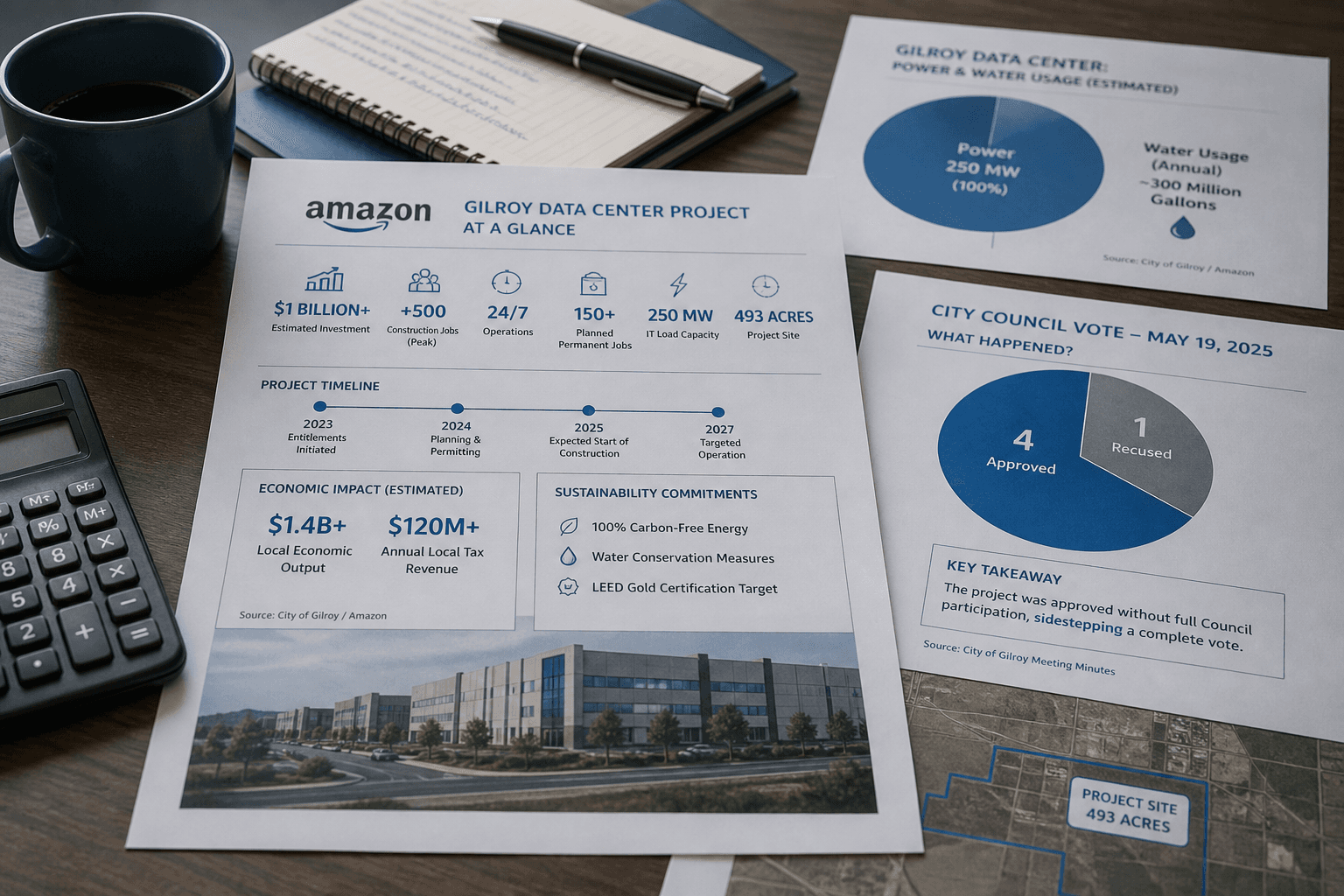
Amazon hasn’t announced this as a consumer AI release. But it’s still AI-release infrastructure. More models, more agents, and bigger workloads need physical capacity. Data centers are where the AI boom becomes concrete, substations, permits, and neighborhood meetings.
What does Amazon’s Gilroy data center mean for AI growth?
This looks like a preview of the next AI bottleneck: not just chips, but permission.
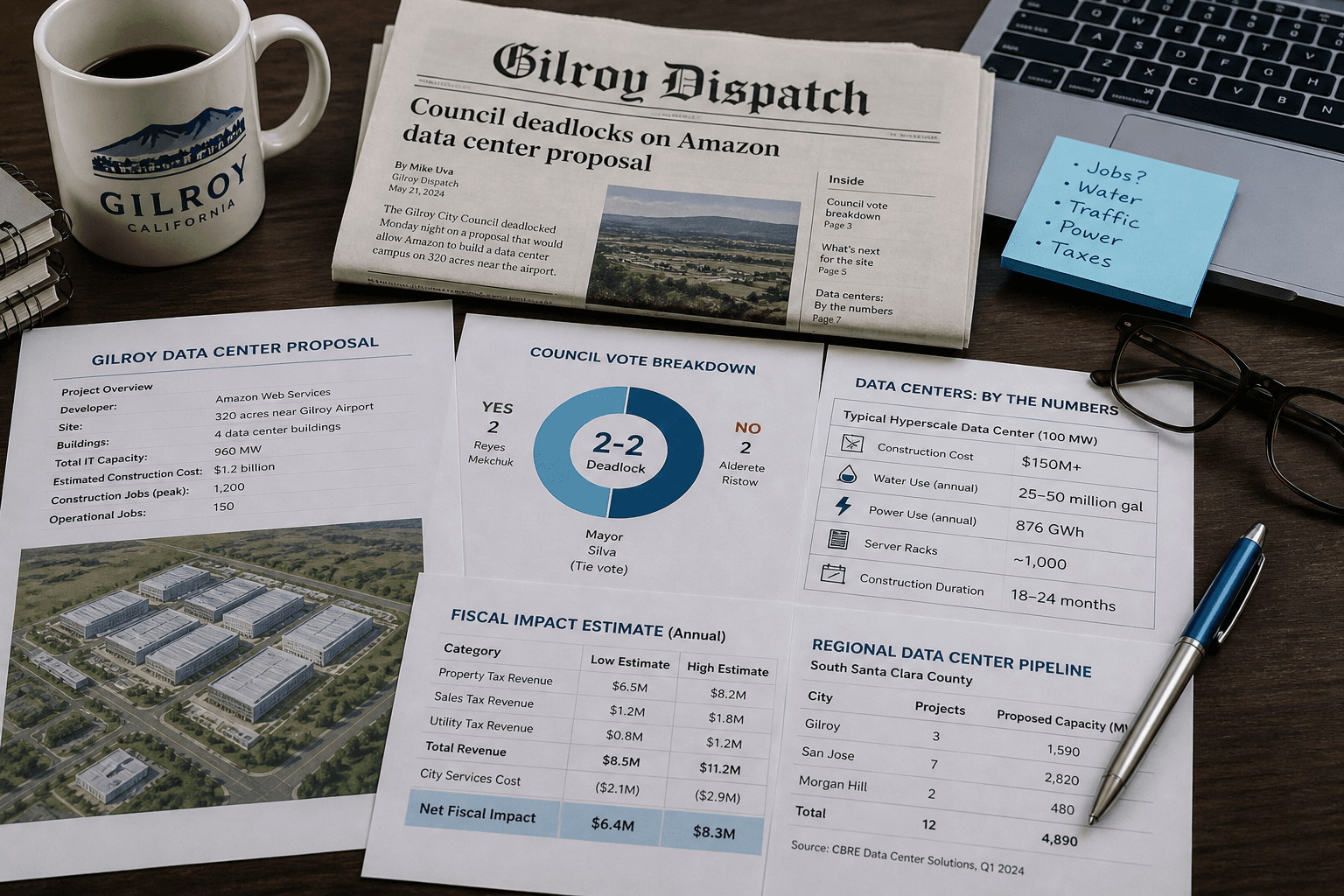
Cloud companies can buy GPUs. They can sign power deals. But they still need communities to accept the facilities that make AI services run. When residents feel boxed out, even legally valid permitting can become a reputational problem.
For Amazon, the stakes are bigger than one city. AWS is one of the core platforms behind enterprise AI deployment. Every new data center decision now carries two stories: capacity for AI customers, and the local cost of building that capacity.
Why this story is getting attention now
The AI industry keeps talking about model capability. Cities are starting to talk about infrastructure burden.