AI Models' Creative Output Converging, Study Finds

A new analysis from Unite.ai suggests the creative output of large language models is starting to look the same across major providers. The report compiles recent tests and community observations showing that when asked for stories, slogans, or design ideas, many AI systems return increasingly similar phrasing and structures. That's a shift from the early days, when each model had a distinct voice.
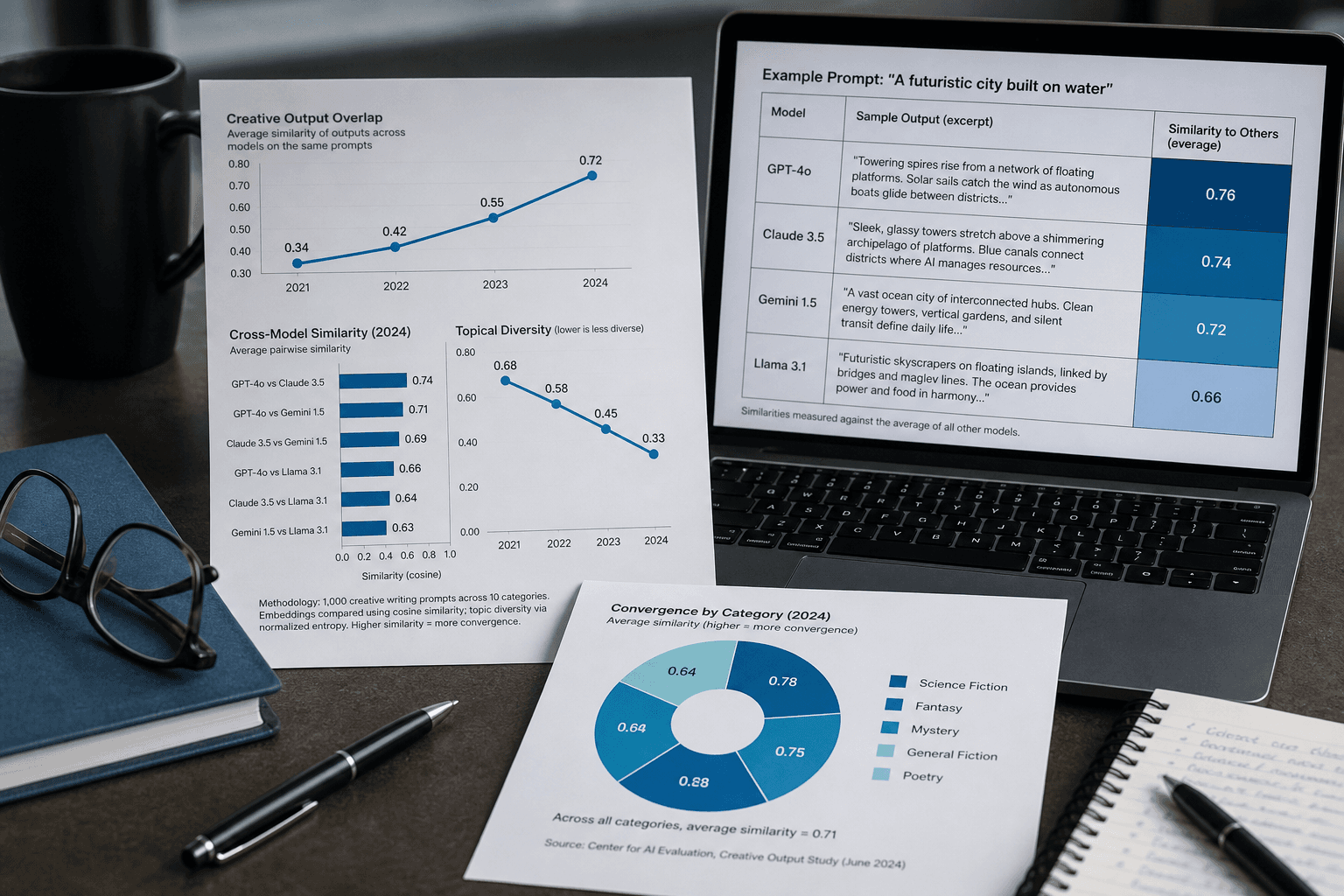
What does this convergence mean for developers?
For teams building on top of multiple APIs, it could mean less risk in switching providers — but also less differentiation. If every model writes like every other, your product's personality stops being a selling point. Developers who valued a specific model's quirks may need to look beyond the base API, maybe fine-tuning or custom prompting to keep an edge.

How did we get here?
The likely cause is training on shared data sources, including AI-generated text that's now all over the web. A recent TechCrunch study found a third of pages published since ChatGPT's launch show signs of AI authorship. That feedback loop means models are increasingly learning from each other's output, flattening their stylistic differences. It's not a broken pipe, but it's a real signal that the ecosystem is maturing into a more uniform commodity.
What's the practical takeaway?
This isn't a crisis — it's a heads-up. If you rely on a model's creative flair, benchmark the actual outputs for your use case, not just the hype. The convergence also opens room for smaller specialized models that deliberately train on human-curated data to stand apart. For now, expect the sameness to keep creeping in as the web fills with AI text.